
Amphora Poses (2022)
for Solo Harp
Duration: 13 minutes
Commission: Marguerite Lynn Williams
Premiere: TBD
Availability: Contact for availability
Program Note
Amphora Poses is a work for harp. The uncertainty that the pandemic imposed on future projects made it impossible for me to work with larger structures for a good deal of time in those initial months and restructuring my teaching for online learning precluded sustained work for many months. What I did do to pass the time was compose hundreds of pages of short composition exercises, including many that dealt with the (Greek/church) modes and various chordal structures.
A year later, on a trip to Italy, I was both excited and moved by vivid ancient Greek amphorae in the museums at both Pompeii, but especially Paestum, a former Greek colony south of Salerno, now famous for its temple ruins. I was particularly struck by the poses of the figures, which were often erotic or musical. Often the musical figures played varieties of lyres or ancient harps. At the time I was unsure how I would respond musically but I knew that I would.
Around that time, my classmate from Eastman, Lyric Opera harpist Lynn Williams, reached out to see if I’d consider writing a work for harp. The trip to Paestum with the harp-playing figures on the amphorae, along with some of the promising modal/chordal exercises from earlier became the inspiration and structure of this new work.
The work is thirteen minutes long and is in roughly five sections that grew out of those fragments. By analogy, the piece unfolds like a trip to a museum, walking past various amphorae in the vitrines of a museum. (The Metropolitan Museum’s collection of amphorae is amazing in this regard. I visited it often while completing Amphora Poses.) Each side of each vase has a different scene, often implying action, frozen as a pose. My sections do not correspond to any particular scene, as the musical ideas ultimately take on lives of their own, but the idea of browsing a number of different poses might suggest to my listeners one strategy to listen to these fragments and transitions.
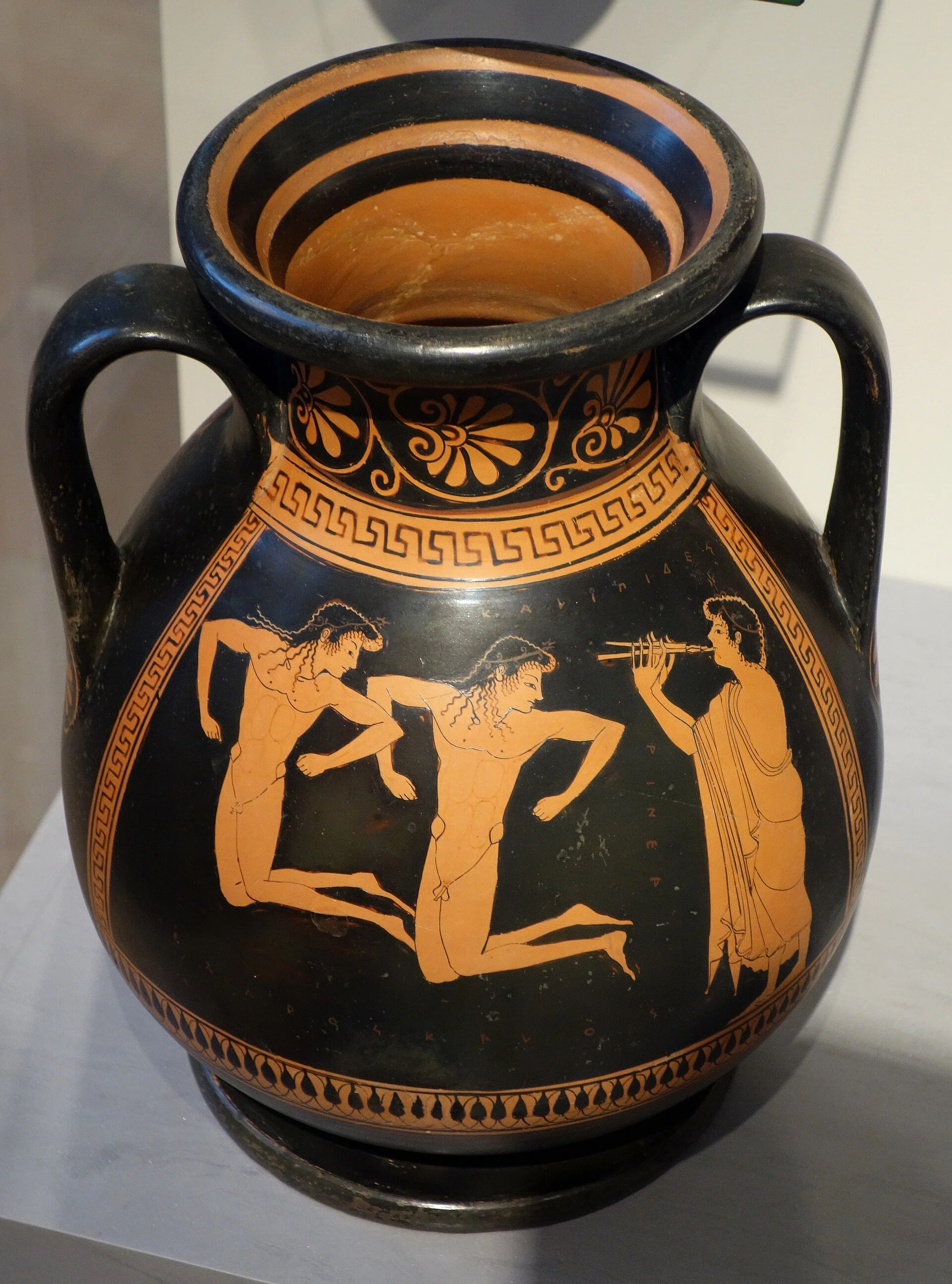
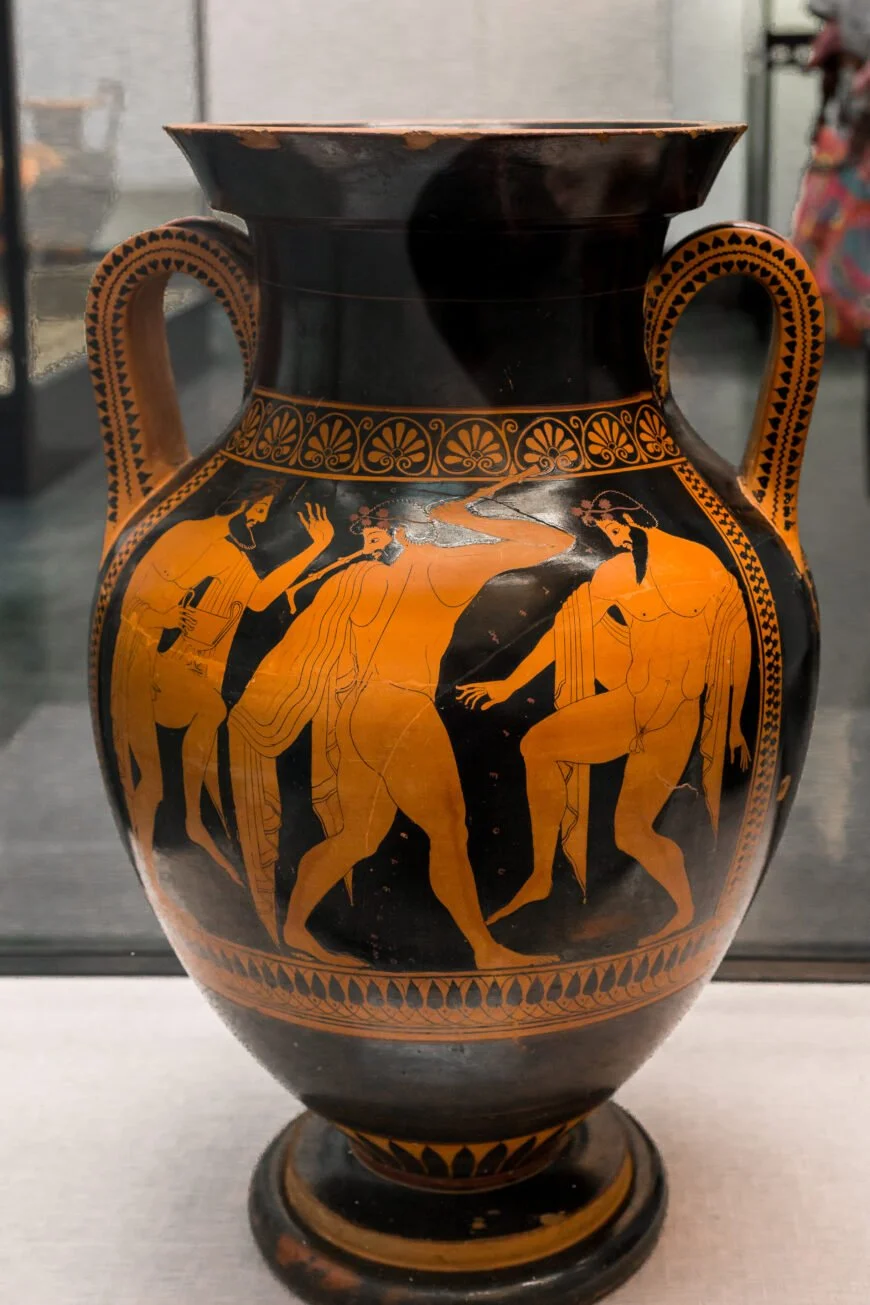
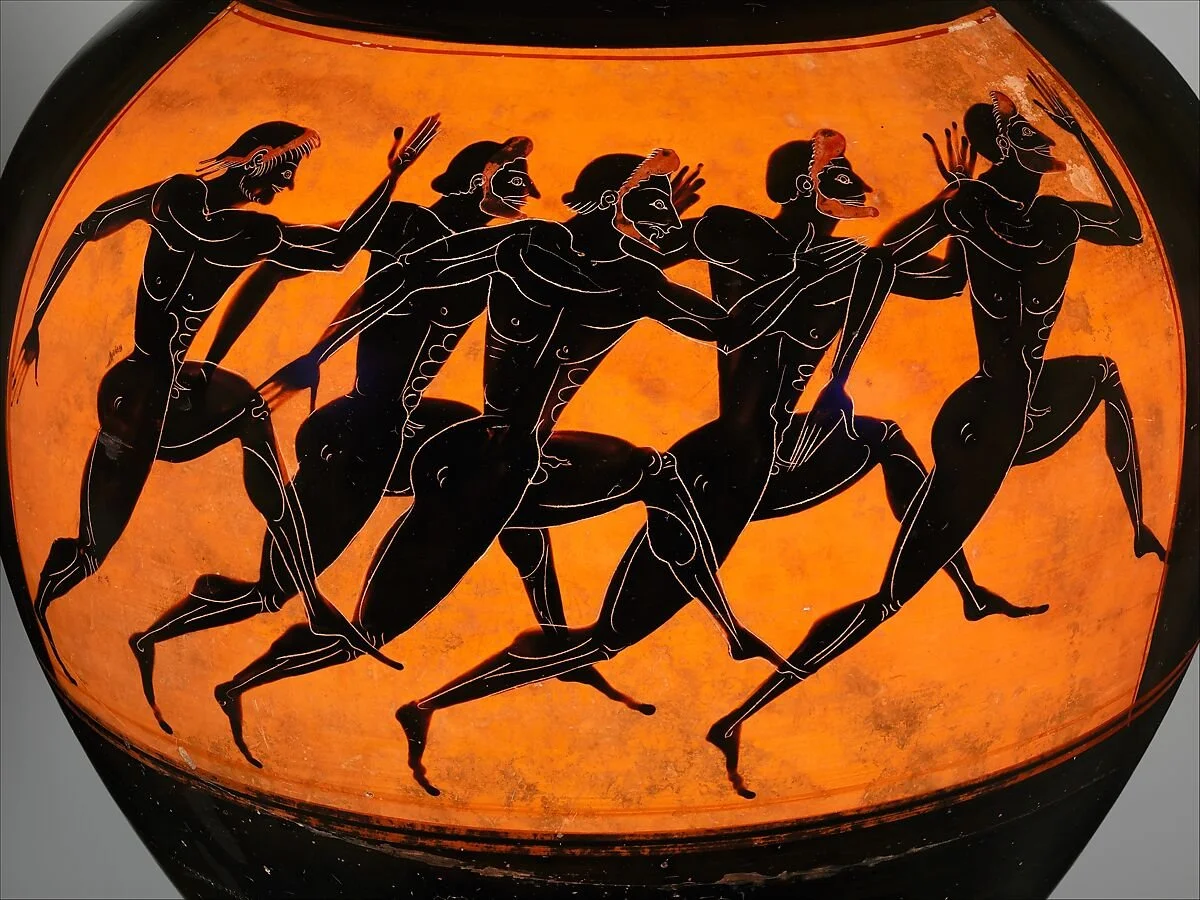
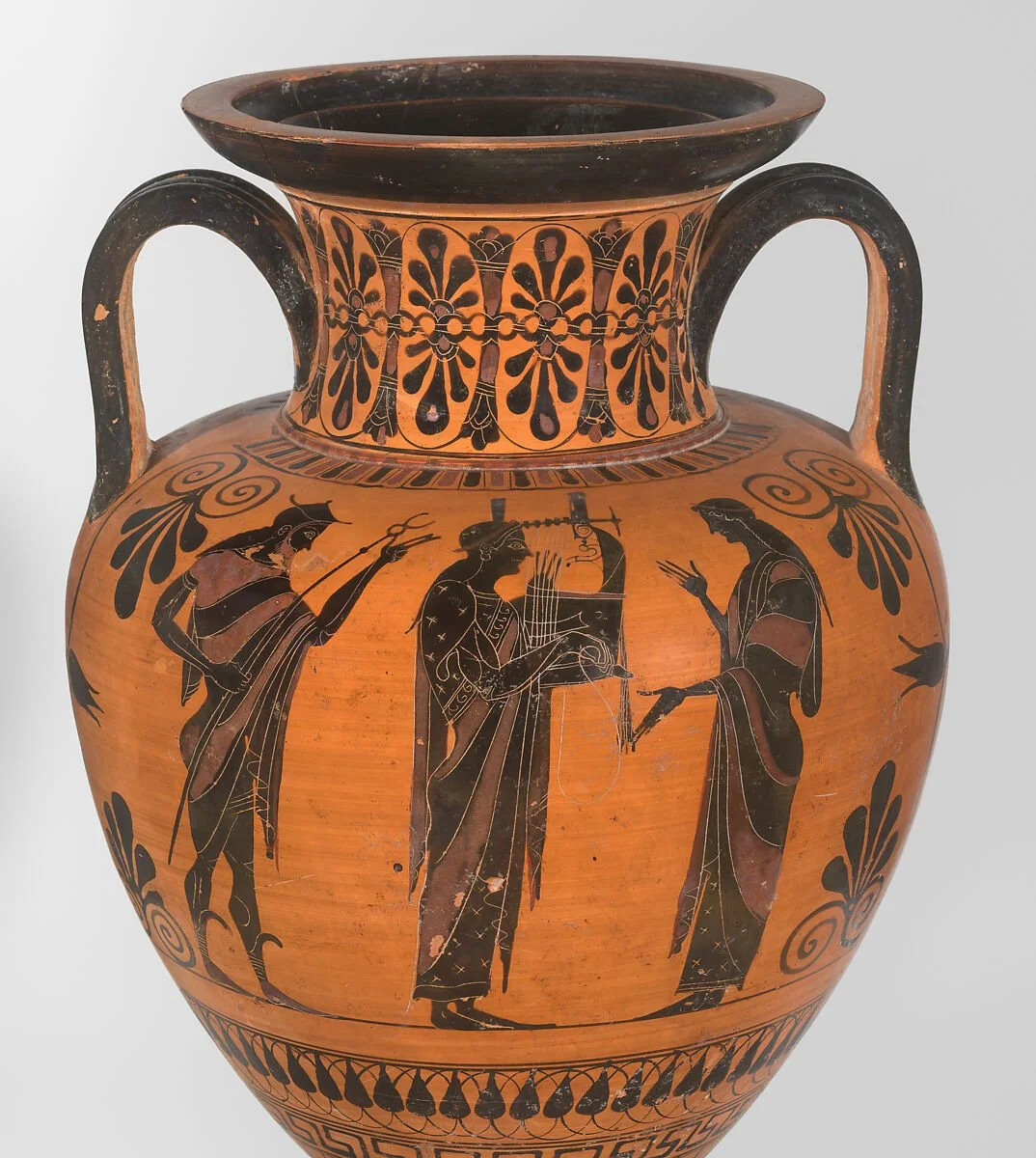
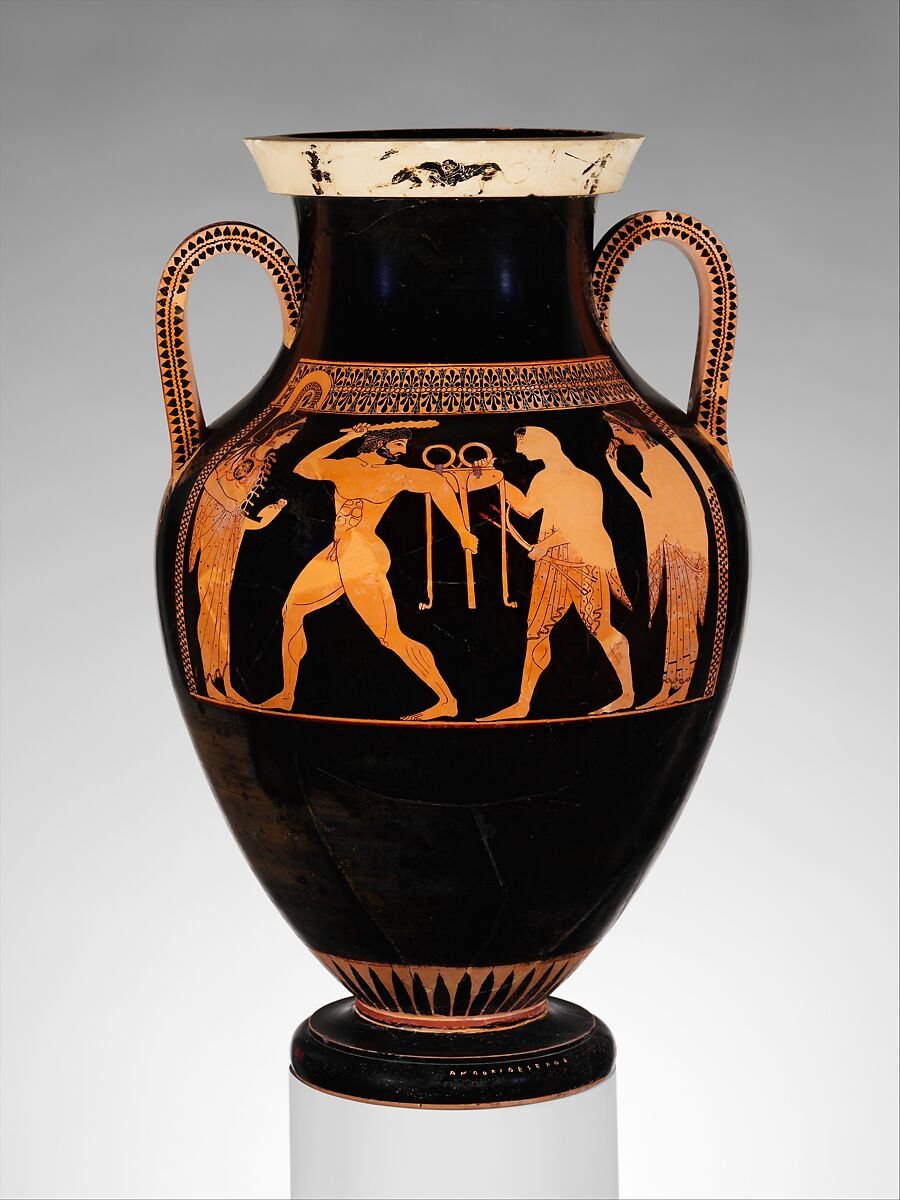
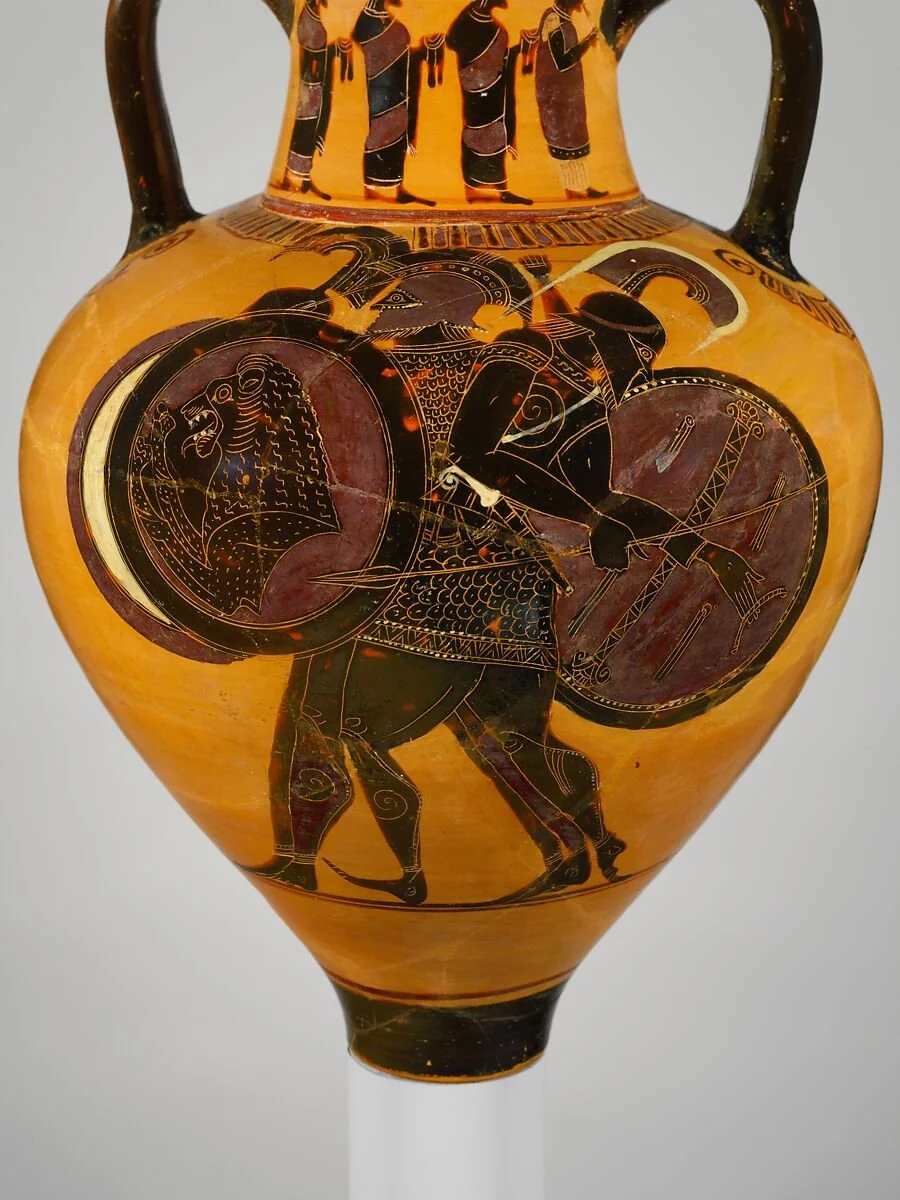
Various Amphoras, several from the Met Museum.